
Strategic Audience Analysis: SeaWorld


Brand Overview & Purpose of the Analysis
SeaWorld is one of the most popular theme park brands in locations across the United States. The park is known for its marine life exhibits, roller coasters, and family-friendly events. Park guests can expect to watch orcas perform, ride the Mako coaster, or attend seasonal festivals. SeaWorld attracts a diverse group of visitors. This analysis examines SeaWorld's social media audience. To gain a deeper understanding of who is engaging with the brand online. We will then see how SeaWorld can enhance its digital presence across various platforms. By locating engagement trends, demographics, and platform behaviors. This report provides data-backed recommendations for more effective outreach.
Audience Demographics & Behaviors
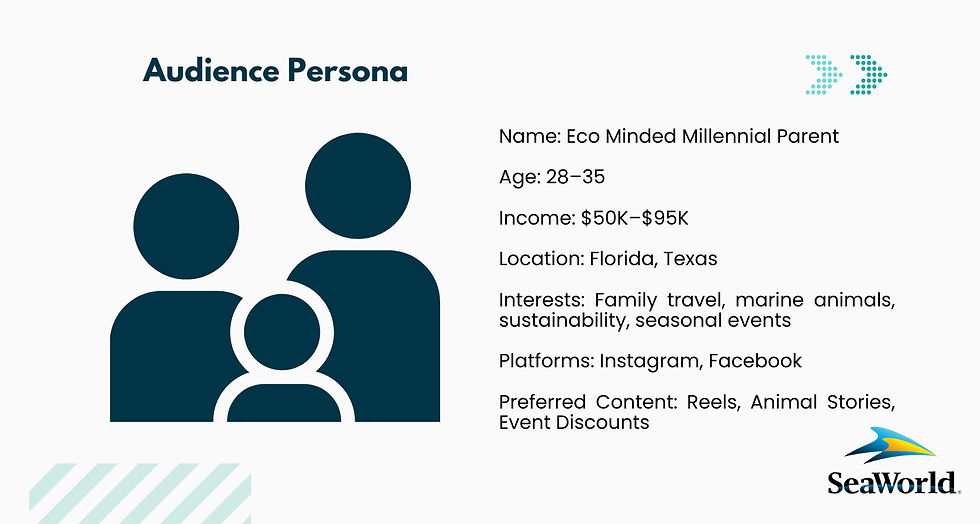
According to available social media data, including estimates from Meta Business Suite and insights from Sprout Social, SeaWorld's core audience appears to be predominantly women aged 25-34. Most of the followers are located in Florida and Texas. SeaWorld's social media base mostly consists of young parents or millennial families. Their annual incomes of around $50,000 to $95,000. This group is primarily interested in activities such as wildlife education, amusement park vacations, and family travel. They respond positively to content that features animal encounters, limited-time events, or thrill-ride videos. According to industry studies, vacation photos and short videos have a significant impact on how families choose travel destinations (Hussain et al., 2024).
Cross-Platform Performance & Sentiment
SeaWorld sees the strongest engagement on Instagram and Facebook. Carousel posts, behind-the-scenes animal care videos, and Reels tend to perform exceptionally well. On the other hand, Twitter (now known as X) receives less interaction and is primarily used for sharing updates or responding to customer support. SeaWorld performs generally positively on visual platforms. The best social media for SeaWorld are platforms where followers can share their excitement or memories. However, Twitter responses can lean more neutral or skeptical, especially during news coverage or controversies. Studies have found that positive engagement is closely tied to how well a brand's content aligns with what users value and expect from the brand online (Wang, Sw, & Yan, 2022). Unlike their competitors, for example, Busch Gardens Tampa. SeaWorld leads in marine storytelling, but they could improve in showcasing user-generated content and interactive posts.

Strategic Insights & Recommendations
SeaWorld's audience is drawn to emotionally engaging, visual content. Especially when the content showcases the animals, rides, or family experiences. To maintain that high engagement, SeaWorld should post more short-form videos on platforms. Instagram and TikTok encourage fans to share their own SeaWorld stories. SeaWorld should run seasonal campaigns, launching behind-the-scenes video series, and partnering with family influencers could all drive deeper engagement. Studies in social media analytics suggest that consistently tailoring content to platform strengths while paying attention to user feedback and trends is one of the best ways to stay competitive in a crowded tourism market (Mukhopadhyay et al., 2023). By leveraging what works and optimizing based on analytics, SeaWorld can expand its digital reach while remaining true to its brand values.
References
Hussain, K., Alam, M. M. D., Malik, A., Tarhini, A., & Al Balushi, M. K. (2024). From likes to luggage: The role of social media content in attracting tourists. Heliyon, 10(19), e38914. https://doi.org/10.1016/j.heliyon.2024.e38914
Mukhopadhyay, S., Jain, T., Modgil, S., & Singh, R. K. (2023). Social media analytics in tourism: A review and agenda for future research. Benchmarking: An International Journal, 30(9), 3725–3750. https://doi.org/10.1108/BIJ-05-2022-0309
OpenAI. (2025). ChatGPT [Large language model]. https://chat.openai.com
Wang, H., & Yan, J. (2022). Effects of social media tourism information quality on destination travel intention: Mediation effect of self-congruity and trust. Frontiers in Psychology, 13. https://doi.org/10.3389/fpsyg.2022.1049149

Comments